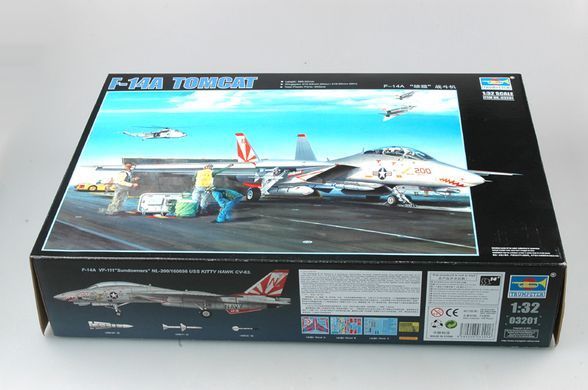
The Grumman F-14 Tomcat is a two-seat, twin-engine, variable-sweep wing supersonic fighter. It first flew on 21 December 1970. The F-14 was the primary carrier-based air superiority fighter of the United States Navy, serving as the fleet's primary air defense interceptor and tactical reconnaissance platform from 1976 to 2006. It was later equipped with the Blue Shield night-time infrared designator for low-altitude attacks. The F-14 was designed to replace the retired F-111B, becoming the first "10" series fighter in the United States Army, given its extensive combat experience against MiG fighters during the Vietnam War. The F-14 first entered service in 1974 aboard the USS Enterprise, replacing the F-4 Phantom II. The first 12 F-14As were production models (sometimes referred to as YF-14As) and were only fitted with precision guidance systems after a significant period of service. The US Navy received a total of 478 F-14As, with another 79 delivered to the Kingdom of Iran at the time. The last 102 F-14As were fitted with the improved TF30-P-414A engine. In addition, the US Navy was supplied with the 80th F-14A, built for the Kingdom of Iran.
Model dimensions: Length: 570.55 mm; Wingspan: 425 mm
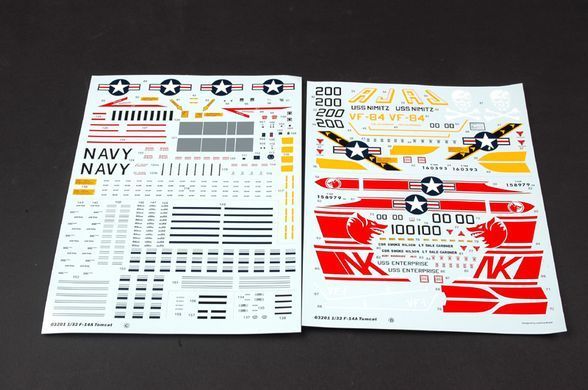
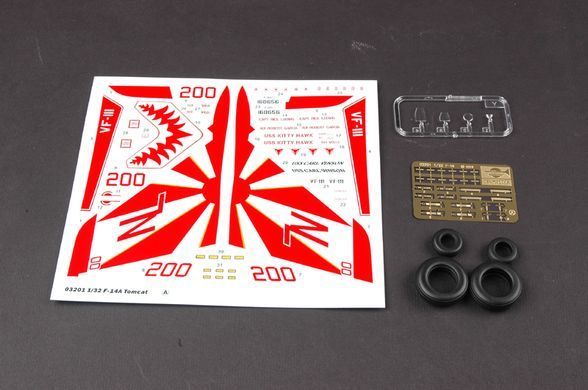
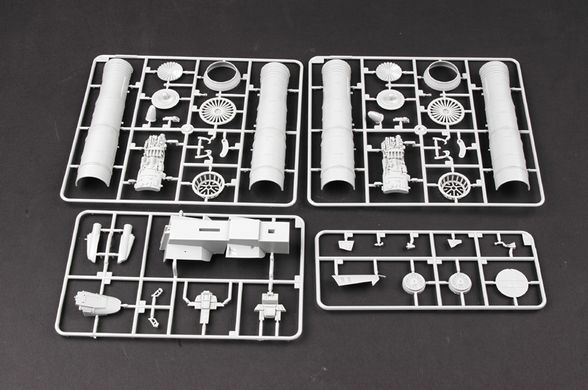
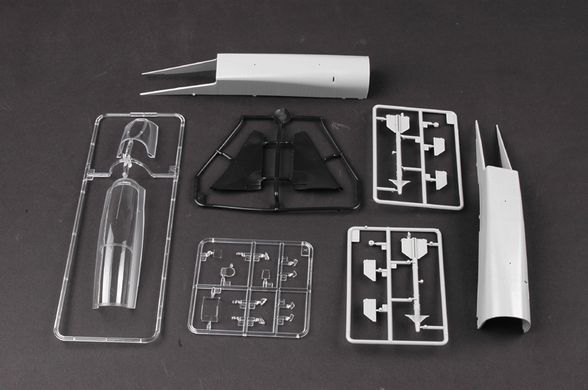
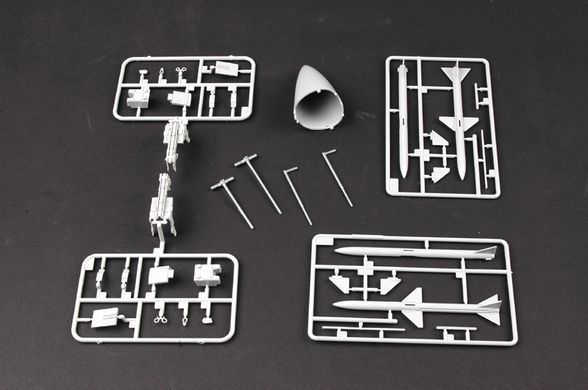
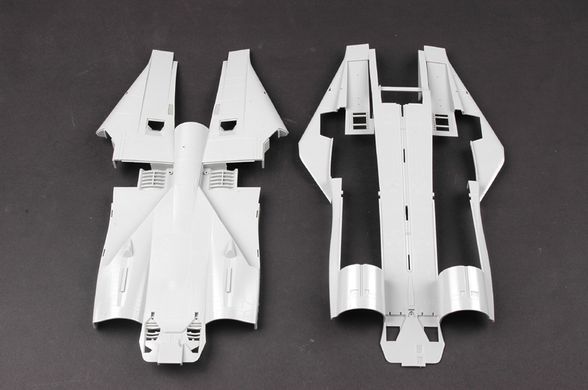
Total number of parts: 454 pcs.