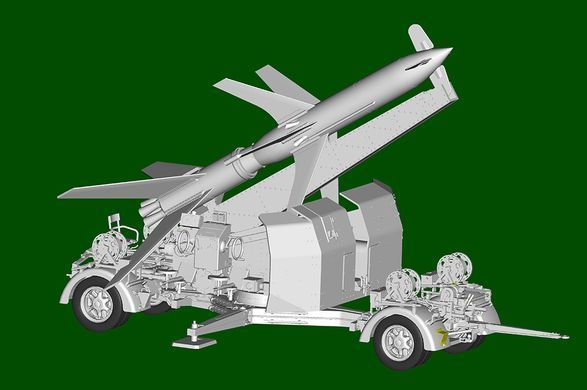
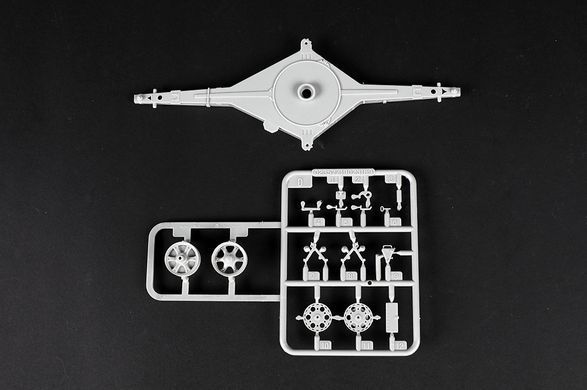
The Rheintochter (German daughter of the Renu missile) was a German experimental surface-to-air guided missile of World War II. The Rheintochter was a two-stage missile with a range of 16,000 meters, capable of carrying a warhead weighing up to 22-24 kilograms.
The first work on the Rheintochter missile began in 1941 at the Rheinmetall-Borsig enterprise, but the first copies of the missile were ready only in the fall of 1943. The Rheintochter was to enter service with anti-aircraft units, and from 1943 to combat Allied bombing expeditions over Germany. The missile was to be as effective as possible, which meant the use of radio wave guidance. In total, three versions of the Rheintochter missile were created. The first, designated R1, did not reach the speed of sound and was actually used mainly for experiments with the steering system and general aerodynamic assumptions of the projectile. Very similar to the R1 version was the R2 version, which, however, turned out to be extremely unsuccessful and was abandoned in 1944. The final version was the Rheintochter R3 rocket, in which the propulsion system and the location of the warhead were changed. This led to a significant improvement in performance, but the power unit turned out to be extremely unsafe, which made it impossible to introduce the system into the lineup. Ultimately, the Rheintochter program was canceled in February 1945. Probably about 50 missiles of this type were created, which were used only for tests and experiments.